
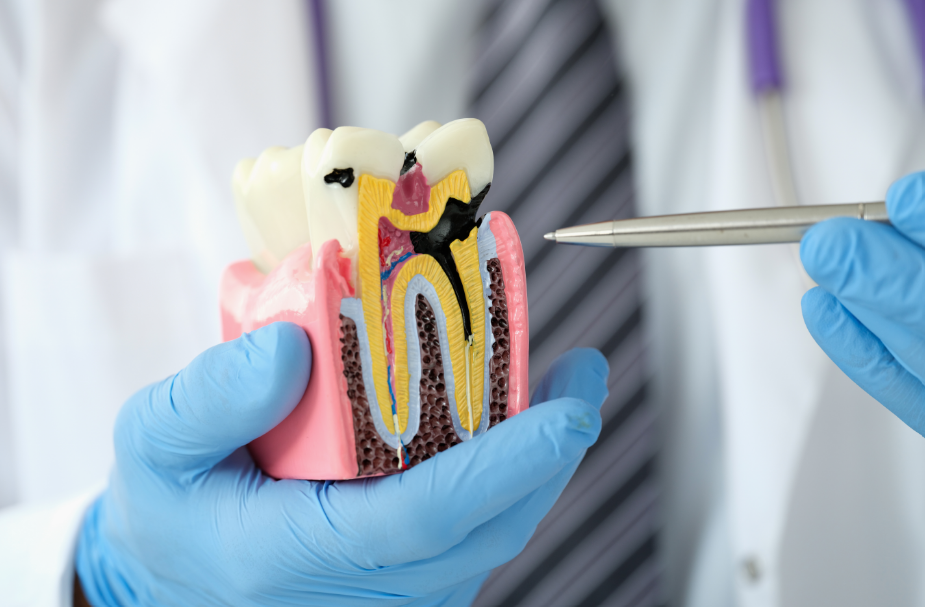
Not all cavities are easy to see. In fact, some of the most common ones form in the tight spaces between your teeth, where your toothbrush can’t easily reach. These hidden spots, called interproximal areas, are especially vulnerable to decay. If you’ve ever wondered how to tell if you have a cavity between your teeth—or how to keep one from developing—here’s what you need to know.
Why Cavities Form Between Teeth
Cavities begin when plaque, bacteria, and food particles linger on the surfaces of your teeth. While brushing helps remove most buildup, the areas between teeth provide a perfect hiding place. Without daily flossing, plaque can sit undisturbed and gradually weaken the enamel. Over time, this can lead to tooth decay in places you may not notice until symptoms appear.
Signs You Might Have a Cavity Between Your Teeth
Because interproximal cavities aren’t visible, early signs can be subtle. One of the most common symptoms is sensitivity, especially when eating something sweet, hot, or cold. You might also feel a sharp twinge when biting down. Some patients notice discomfort that seems to radiate from the gums between two teeth. If the cavity is more advanced, you may spot discoloration or find that food consistently gets trapped in the same spot. However, many people experience no symptoms at all, which is why regular checkups are so important.
How Dentists Detect Hidden Cavities
Dentists rely on specialized tools and X-rays to spot decay between teeth. Bitewing X-rays allow your dentist to see below the surface and identify cavities that would be impossible to detect during a visual exam alone. During your appointment, your dentist may also use dental instruments to gently check for softened enamel. Catching cavities early can help prevent the need for more involved treatment later.
If you are diagnosed with an interproximal cavity, your dentist will likely recommend a tooth-colored filling to repair the damage and prevent the decay from spreading.
How to Prevent Cavities Between Teeth
The best defense against interproximal cavities is consistent oral hygiene. Brushing twice a day is essential, but flossing daily is what truly protects the areas your toothbrush can’t reach. Using an antibacterial mouthwash can help reduce harmful bacteria as well. Foods high in sugar or starch can feed cavity-causing bacteria, so keeping these to a minimum can also make a big difference. Finally, keeping up with your routine dental visits allows your dentist to detect early signs of decay and provide targeted guidance based on your specific needs.
When to See a Dentist
If you experience new sensitivity, lingering pain, or discomfort between teeth, it’s a good idea to schedule an exam. Early treatment can save you from more extensive procedures—and the sooner a cavity is addressed, the easier it is to repair.
Interproximal cavities may be sneaky, but with good habits and regular professional care, they’re absolutely manageable.
About the Practice
At Jupiter Family Dental of Richardson, patients receive personalized, comprehensive care to help keep every part of their smile healthy—including the spaces between teeth. Dr. Chung Chien Hsia provides thorough exams, digital X-rays, and tooth-colored fillings designed to blend naturally with your enamel. Our warm, attentive approach ensures patients feel informed and supported at every visit.
Call us at (214) 432-1133 or request an appointment online.